
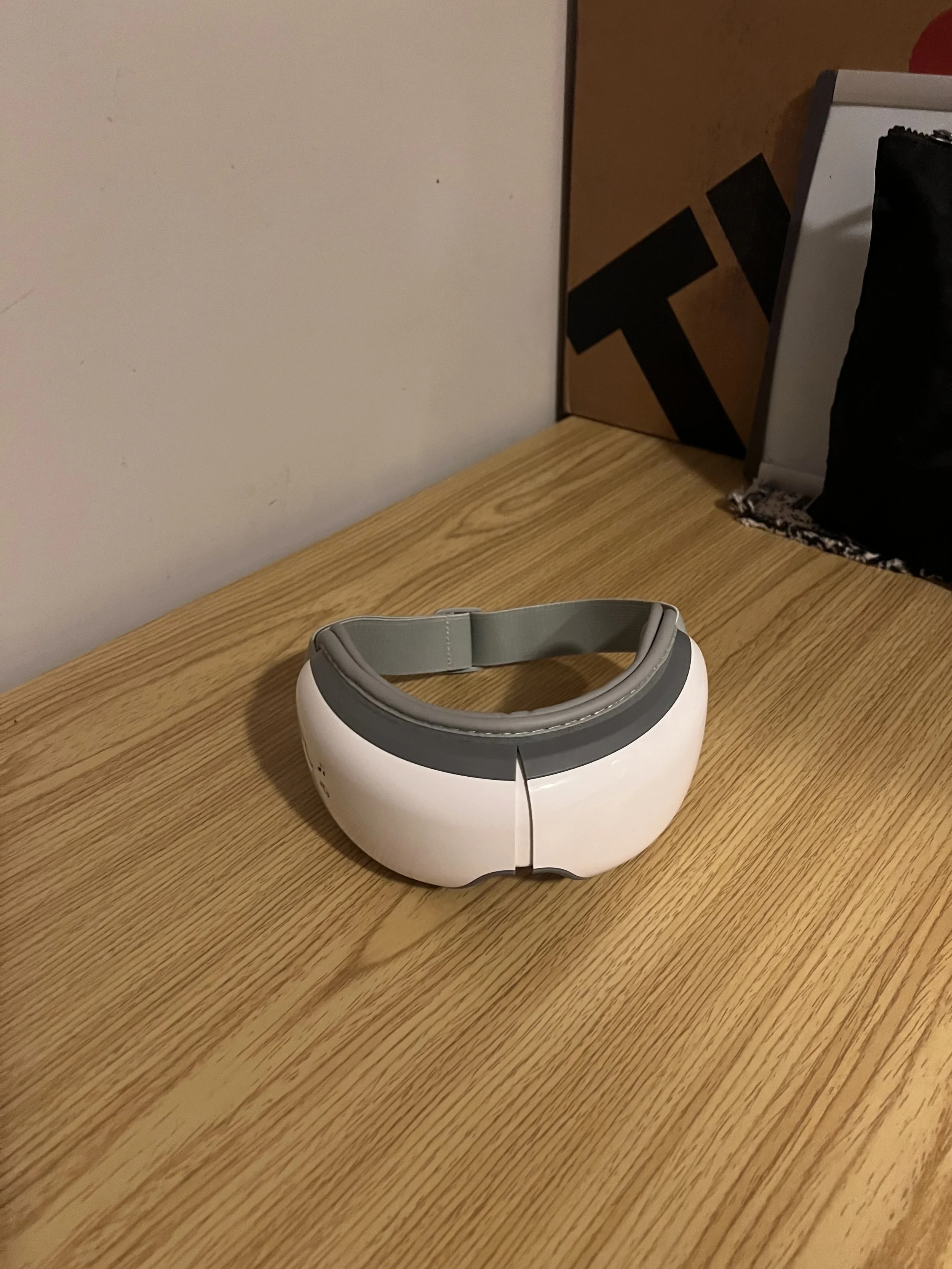
Somatic Snuggie
Designing a calming, screen-free experience.
-
Spending long periods of time on screens can make it difficult for people to slow down and feel present. Many tools that are meant to support well-being still rely on notifications, tracking, or constant interaction, which can sometimes make the experience feel overwhelming instead of calming.
Because of this, we wanted to design something that moves away from screens and focuses more on physical experience. The goal was to create a simple and calming way for users to relax without needing to interact with a device.
-
Our process started with exploring how people deal with stress, fatigue, and screen overload. This helped us understand that many current solutions still depend heavily on digital interaction, which shaped our decision to move toward a more physical experience.
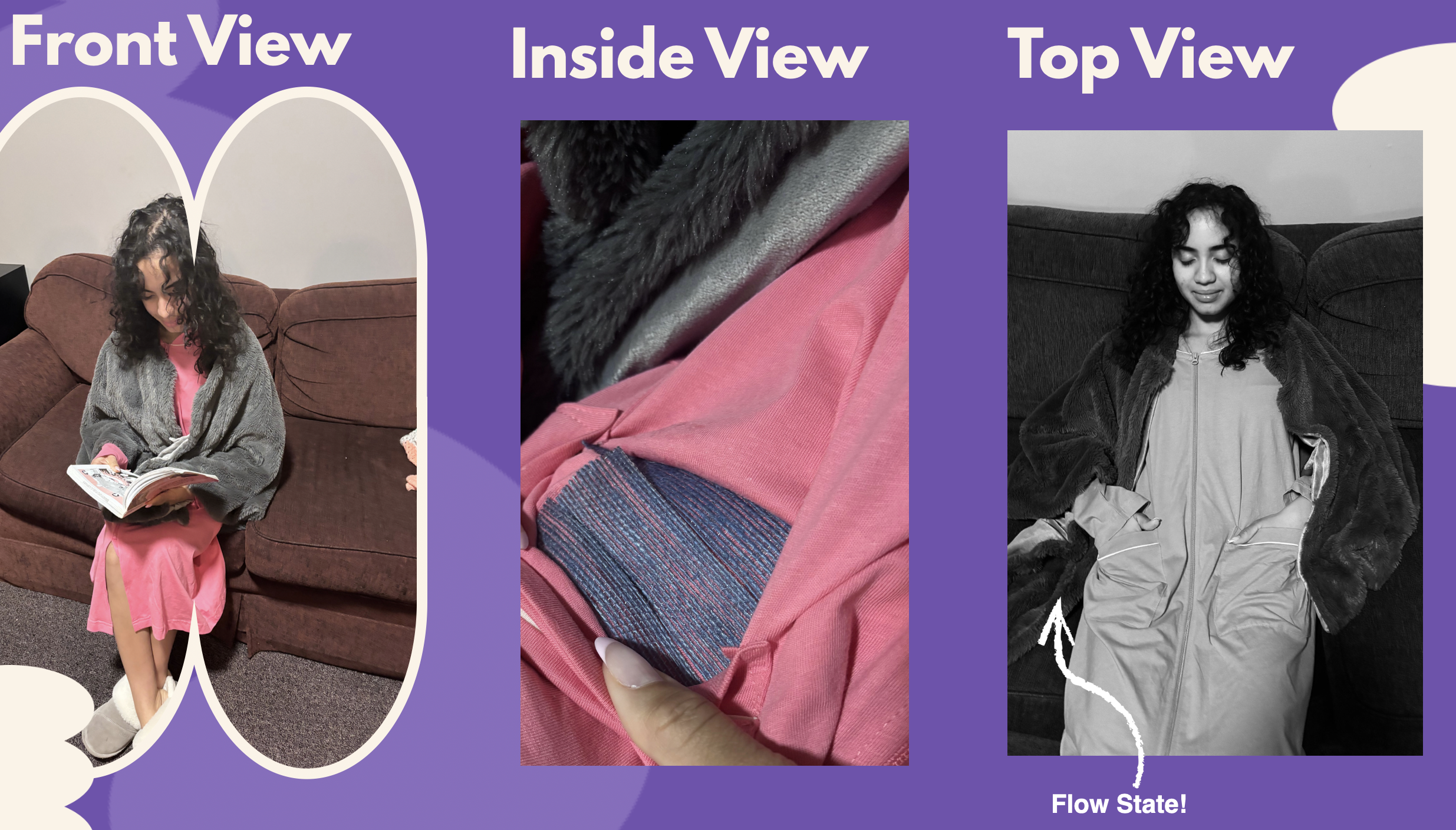
During ideation, we explored different concepts as a group, but some of our early ideas were too complex and unclear. It was difficult to understand how users would interact with them in a realistic way. Because of this, we made the decision to simplify our direction and focus on one clear concept: a wearable design that uses touch and vibration to create a calming effect.
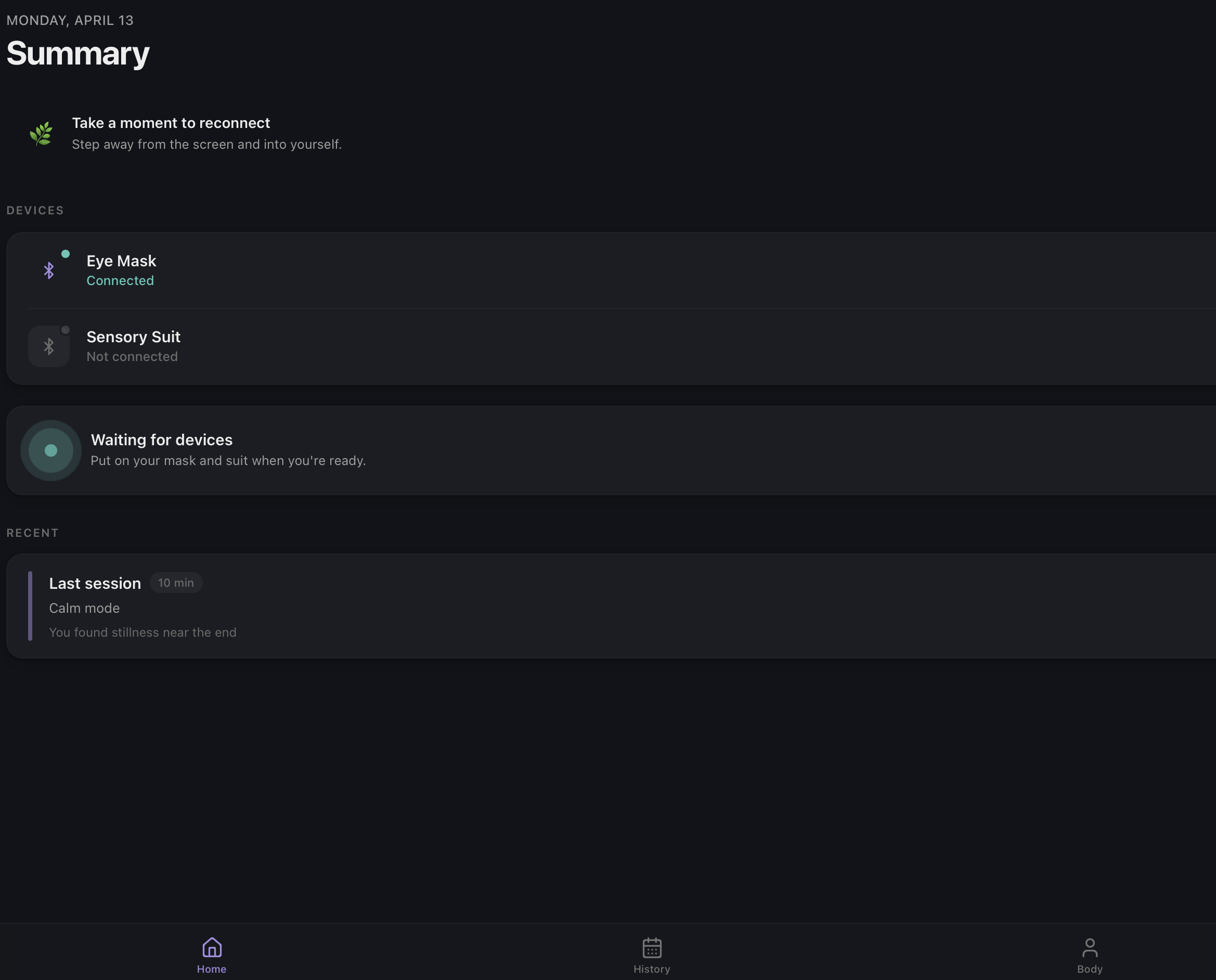
As we moved into prototyping, we focused on how the wearable and companion app could work together. One decision that worked well was making the app something users interact with after the session, rather than during it. This helped keep the main experience screen-free and aligned with our goal.
Feedback played an important role in improving the design. It helped us identify what was confusing and pushed us to make the experience more clear, simple, and intentional.
-
One of the biggest strengths of this project was our ability to simplify our ideas and stay focused on the user experience. Some of our early concepts did not work because they were too complex and difficult for users to understand. By recognizing this, we were able to shift our approach and create a clearer, more effective solution.
Through this process, I learned the importance of testing ideas early, being open to feedback, and not being afraid to change direction. It showed me that strong design comes from refining ideas over time, not getting them perfect on the first try.
This project helped me grow as a designer by pushing me to think more critically about how users experience a product, not just how it looks. It reinforced the importance of clarity, simplicity, and designing with intention.



-
Our design approach focused on keeping the experience simple, calming, and easy to understand. We started by exploring user needs and identifying what aspects of current solutions were not working. From there, we narrowed our focus and made intentional design decisions that supported a screen-free experience.
We also prioritized testing and feedback throughout the process. Instead of trying to perfect the idea right away, we focused on refining it step by step. This allowed us to adjust our direction when needed and create a more realistic and user-centered solution.

-
Through this project I gained experience working with Arduino and understanding how sensors and motors respond through code. I learned how to test and adjust the ultrasonic sensor so it only activated at the right distance. Building the structure taught me how materials behave and why prototypes need constant adjustment. I also learned how ethical choices shape a design, especially when thinking about how users and wildlife interact. Overall, this project helped me build confidence in troubleshooting, hands-on making, and creating systems that feel intentional and responsible.